
7 Proven Benefits of Custom Software for Businesses in 2025
Discover the benefits of custom software for businesses, from improved efficiency to long-term scalability and why tailored tools beat off-the-shelf solutions.
Want to make your Microsoft 365 work harder for your business?
and we’ll tailor a solution that’s just right for you.
Every growing business faces a familiar frustration: generic software that doesn’t quite fit. Out-of-the-box tools often force your teams to bend their workflows, creating inefficiencies, duplicated work, and unnecessary stress. For IT leaders in the UK, this misalignment turns out to be very costly. Recent data shows UK enterprises lose an average of £107,000 per IT team annually due to slow or misaligned software deployments.
You’re not alone in this struggle. Many decision-makers feel stuck between meeting business goals and dealing with technology that limits rather than supports progress. Custom software changes that dynamic. When solutions are designed around your specific workflows, they work with your teams, not against them. Integration becomes seamless, efficiency improves, and scaling for growth is no longer a headache.
In the following sections, we will get into the seven proven benefits of custom software for businesses in 2025, illustrating how a bespoke approach can transform your operations and drive sustainable growth.
Important Insights
- Align Custom Software with Your Workflows: Custom software works best when it’s designed around your specific business processes, ensuring every feature supports operational goals and drives measurable growth.
- Prioritise Scalability and Adaptability: Choose solutions that can evolve with your business. Scalable software accommodates more users, higher workloads, and integrates seamlessly with existing systems.
- Focus on Security and Compliance: Bespoke systems allow you to address regulatory requirements and safeguard sensitive data, reducing risks that generic solutions often leave exposed.
- Maximise Long-Term ROI: Beyond initial costs, custom software delivers efficiency, cost savings, enhanced productivity, and improved customer experiences, creating a sustained competitive advantage.
- Data-Driven Decision Making: Centralised and real-time data insights empower smarter, faster decisions, helping leaders respond to market trends and operational challenges effectively.
Essential Traits of Bespoke Software That Drive Results
Custom software succeeds where generic solutions fall short because it is purpose-built to meet your operational and strategic needs. The following traits highlight what makes bespoke solutions stand out and why they deliver tangible value to organisations:
Tailored Functionality: Features are designed around your exact business processes, ensuring teams can execute workflows efficiently. This alignment reduces wasted effort, improves accuracy, and allows IT leaders to prioritise initiatives that drive measurable results.
Seamless Integration: Custom software connects with existing systems, databases, and platforms, creating a unified workflow. This integration reduces manual work, consolidates data visibility, and ensures decision-makers have reliable insights in real time.
Scalable Design: Built to evolve alongside your business, bespoke solutions support increased users, larger workloads, and the addition of new features without costly disruptions or extended downtime.
Enhanced Security and Compliance: Security protocols are tailored to your business and regulatory requirements. This minimises vulnerabilities, protects sensitive data, and ensures compliance with standards relevant to your sector.
Long-Term Support and Optimisation: Dedicated support and ongoing updates ensure the system continues to meet your evolving needs. IT leaders can plan confidently, knowing the software adapts as operations and business priorities change.
Managing complex operations with evolving business needs is never straightforward. Custom software can simplify this by adapting to how your teams actually work, integrating seamlessly, and supporting growth without constant disruption. Alberon partners with organisations to create solutions that quietly work behind the scenes, letting your teams focus on what matters most, running the business effectively and making informed decisions.
Schedule a call with our team to start your custom software journey.

With a clear understanding of what custom software entails, we can now look at the tangible benefits it offers businesses.
How Custom Software Fits Your Business Needs Perfectly?
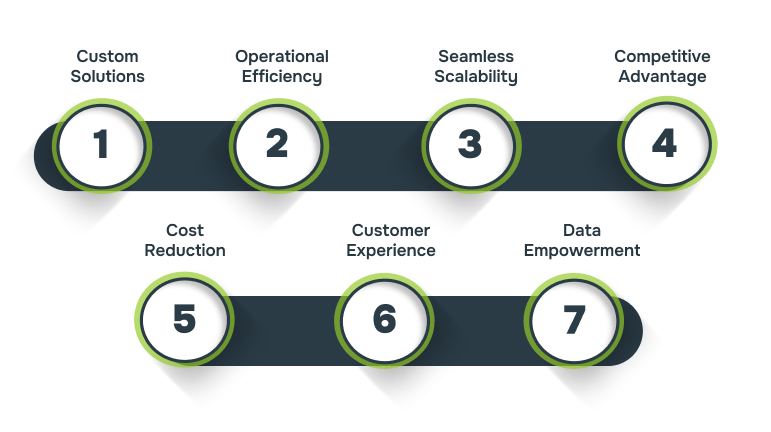
Custom software is not just a tool; it is a strategic investment that can reshape the way a business operates. Unlike off-the-shelf solutions, which often force teams to adapt their workflows, bespoke systems are designed to fit your business processes, scale with growth, and deliver measurable results. Here is an in-depth look at the key benefits businesses can experience in 2025.
1. Tailored to Your Unique Business Needs
Every business has its own structure, processes, and priorities. Off-the-shelf software is designed to serve many types of businesses, which often leads to irrelevant features and unnecessary complexity. Custom software is built specifically for your business requirements, ensuring that every function contributes directly to your operations efficiently.
Why it matters: A system aligned with your workflows reduces time spent on workarounds and allows teams to focus on tasks that drive business results. Over time, this alignment improves operational consistency and helps teams perform at their best.
2. Boosts Efficiency and Productivity
Custom software automates repetitive and time-consuming tasks while minimising errors. This allows employees to concentrate on high-value activities and ensures workflows move smoothly from one stage to the next.
Why it matters: Enhanced efficiency means teams can complete projects faster, reduce bottlenecks, and achieve more without increasing headcount. This boost in productivity also allows the business to respond faster to market demands, improving overall performance and agility.
3. Scales Seamlessly with Your Business
Growth brings new challenges, such as more users, higher data volumes, and increasingly complex workflows. Custom software is designed with flexibility and scalability in mind, allowing it to evolve alongside your business needs without causing disruption.
Why it matters: Off-the-shelf solutions can become restrictive as the business grows, often requiring multiple add-ons or complete replacements. Bespoke software grows with you, providing a cost-effective and seamless path to support expansion while avoiding operational interruptions.
4. Helps Your Business Stand Out
Custom software allows your business to develop unique features and processes that differentiate you from competitors. It gives you control over workflows, user experience, and service delivery in ways that generic tools cannot.
Why it matters: With the ability to innovate internally and adapt quickly, businesses can offer superior services, respond faster to market changes, and stay ahead of competitors who rely on standard software solutions. This differentiation can be a decisive factor in gaining and retaining clients.
5. Reduces Long-Term Costs
While the initial investment in custom software may be higher than purchasing off-the-shelf tools, it often results in significant long-term savings. Custom solutions eliminate unnecessary features, reduce dependency on multiple licenses, and minimise the costs associated with inefficient or mismatched software.
Why it matters: Bespoke systems are easier to maintain and upgrade according to specific business needs, avoiding recurring fees and reducing the total cost of ownership over time. This ensures that the investment pays off both operationally and financially.
6. Enhances Customer Experience and Personalisation
Custom software can centralise and analyse data to provide personalised, seamless experiences for your clients. From tailored communication to automated follow-ups and responsive service tools, it enables businesses to engage customers effectively and proactively.
Why it matters: Personalisation is key to building loyalty and trust. By delivering experiences that reflect individual preferences and needs, businesses can strengthen client relationships, improve satisfaction, and increase retention rates, which directly impacts long-term revenue.
7. Empowers Data-Driven Decisions
A major advantage of custom software is its ability to aggregate, analyse, and visualise business data in real time. Decision-makers gain access to insights across operations, sales, finance, and customer interactions, allowing for informed and timely strategic decisions.
Why it matters: Actionable intelligence reduces guesswork and operational risk. Businesses can monitor performance trends, identify opportunities for improvement, and respond proactively to challenges. This leads to smarter strategies and better outcomes in an increasingly competitive market.
To fully realise these benefits, it is essential to follow a structured implementation process that ensures the software is tailored to your workflows, integrates seamlessly, and scales with your business needs.
Process of Implementing Custom Software
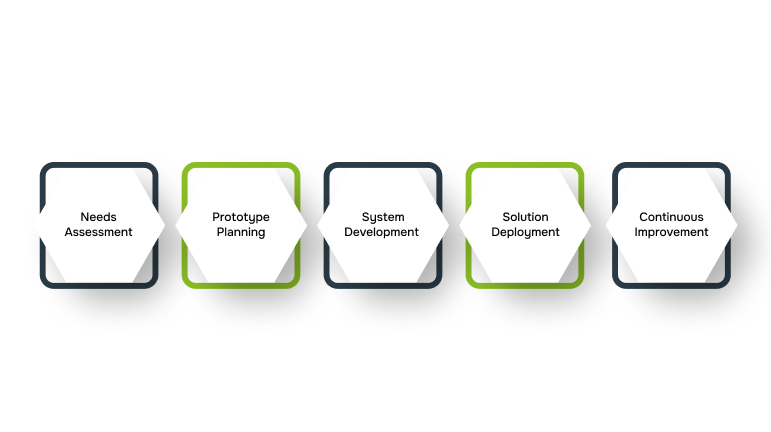
Implementing custom software is a multi-stage process that ensures the system fully meets business requirements, integrates with existing tools, and supports future growth. Each stage is carefully structured to reduce risks, avoid operational disruption, and create a solution tailored to the organisation’s workflows.
Step 1: Discovery & Needs Assessment
The first stage focuses on gathering a complete understanding of the organisation’s current processes, challenges, and objectives. This involves:
- Conducting interviews and workshops with stakeholders across departments to identify pain points and inefficiencies.
- Mapping out existing workflows to pinpoint repetitive tasks, bottlenecks, and areas where automation could save time.
- Reviewing current software systems and data structures to assess compatibility and integration needs.
- Defining both functional requirements (what the software must do) and technical requirements (security, performance, compliance, and scalability).
This stage establishes a comprehensive blueprint for the custom solution, ensuring alignment with strategic goals and operational realities.
Step 2: Prototyping & Planning
Once the requirements are clear, the development team creates prototypes or wireframes to visualise the system’s functionality. Key activities include:
- Designing mockups of interfaces and dashboards to validate usability and workflow efficiency.
- Prioritising features based on business impact and user needs to focus on high-value functionality first.
- Planning integration with existing systems, databases, or third-party tools to ensure seamless operation.
- Creating a detailed project roadmap that outlines milestones, timelines, resources, and risk management strategies.
This step allows stakeholders to provide feedback early, reducing the chances of costly revisions during development.
Step 3: Development & Integration
The development phase turns the approved prototypes into a fully functioning software system. This includes:
- Writing code using the selected technology stack and implementing the planned architecture.
- Configuring databases and establishing secure data flows between new and existing systems.
- Conducting unit testing and system testing to identify and fix bugs, performance issues, and security vulnerabilities.
- Iteratively refining features based on test results and stakeholder feedback to ensure the system meets expectations.
Integration with legacy systems or external platforms is carefully managed to maintain business continuity and data integrity.
Step 4: Deployment & Training
Deployment is executed in a structured manner to minimise operational disruption. This stage includes:
- Rolling out the software in phases or as a full deployment depending on business size and complexity.
- Performing user acceptance testing (UAT) to confirm that the system meets the documented requirements.
- Conducting hands-on training sessions for employees and providing user manuals, guides, and tutorials.
- Establishing support channels for troubleshooting early issues during initial usage.
This ensures employees are confident using the system, and adoption occurs smoothly.
Step 5: Ongoing Optimisation & Support
Even after deployment, the software requires continuous attention to stay effective and relevant. Activities include:
- Monitoring system performance and addressing bugs or errors promptly.
- Rolling out updates and new features to adapt to evolving business needs.
- Analysing user behaviour and feedback to refine workflows and improve usability.
- Ensuring scalability to handle increased data volumes, user growth, or expanded processes over time.
- Maintaining compliance with regulations and implementing security updates to protect sensitive data.
This continuous cycle ensures the software remains a strategic asset rather than a static tool.
Following these structured steps ensures a successful implementation. For example, Alberon delivered a web-based software management system for Hertford College, centralising staff and student data, integrating it with existing platforms, and streamlining processes like student room allocation. This case highlights how a carefully planned and executed custom solution turns complex workflows into efficient, scalable operations while supporting long-term organisational growth.
Even with a clear process, some organisations still hesitate due to misconceptions about cost, complexity, or adaptability. Let’s address the most common myths.

Common Misconceptions About Custom Software
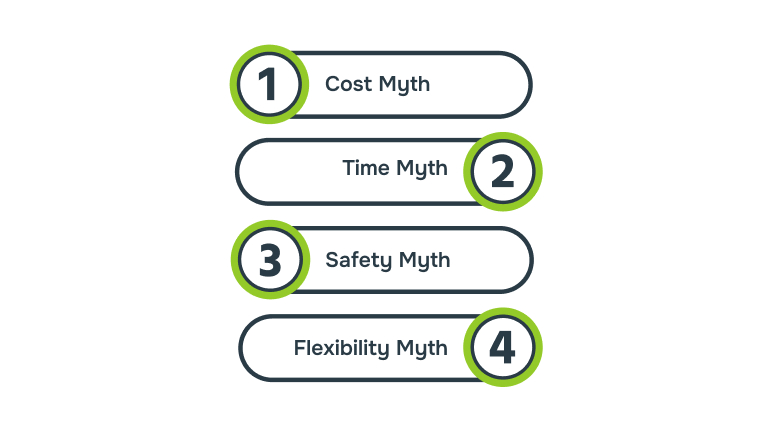
Despite its growing adoption, many organisations hesitate to explore custom software due to outdated assumptions. Let’s clear up a few of the most common myths:
1. “Custom software is always expensive.”
Upfront costs can be higher than off-the-shelf tools, but long-term ROI is often significantly better. With no recurring licence fees, unnecessary features or productivity bottlenecks, most businesses recover the investment faster than expected.
2. “It takes too long to build.”
Modern development frameworks and agile delivery models allow businesses to start using core features early while additional modules roll out in phases. It does not have to be a year-long wait, as many solutions go live within weeks.
3. “Off-the-shelf tools are safer.”
Security depends on implementation, not packaging. A custom-built system can be more secure as it avoids widely targeted vulnerabilities and is designed around strict access controls unique to your organisation.
4. “Once it’s built, it’s difficult to change.”
Custom software is not static. With proper architecture and ongoing support, it evolves as your business evolves rather than staying inflexible like generic tools that struggle to adapt as processes grow more complex.
By separating fact from fiction, it becomes clear that custom software isn’t a risky investment. It’s often the smarter, more sustainable path for growing businesses.
Now that we’ve cleared up the myths around custom software, the next step is figuring out who can build it the right way.
How to Pick a Custom Software Partner That Fits Your Business?
The right development partner can make or break your custom software project. Beyond technical skills, you need a team that listens, understands your goals, and builds a solution that delivers long-term value instead of short-term fixes. Here’s what you need to look for in a development partner:
- Consultative approach – A good partner will ask questions, refine your ideas, and guide decision-making rather than simply taking orders.
- Industry knowledge – Experience in your sector helps avoid common pitfalls and ensures the software aligns with real-world challenges.
- Clear, transparent process – You should always know what’s being worked on, the timelines, and the milestones.
- Ongoing support – The partnership shouldn’t end at launch. Look for a team that offers updates, bug fixes, and scaling as your needs evolve.
- Focus on security and compliance – Especially if you handle sensitive data, compliance should be built in from the very beginning.
Key Questions to Ask Before Deciding
- How do you approach discovery and planning?
- What communication methods will be used during development?
- Do you have examples of similar projects you’ve delivered?
- How do you handle post-launch changes or scaling needs?
- What steps do you take to ensure data protection?
Once you know what to look for in a partner, it helps to see how a trusted provider like Alberon applies these principles to deliver tailored, high-impact solutions.
Why Choose Alberon as Your Custom Software Partner
Investing in custom software is a strategic decision, and choosing the right partner can make all the difference. A reliable development team does more than just code; they work alongside you to understand your workflows, recommend solutions, and ensure the technology evolves with your business.
Alberon is a UK-based software development company that specialises in creating bespoke solutions tailored to each client’s unique needs. With expertise across industries such as education, healthcare, manufacturing, and nonprofits, Alberon delivers software that is secure, scalable, and built to simplify complex operations.
Key Services and Features:
- Dynamics 365 Solutions – Optimise and centralise your business processes. From sales and operations to customer engagement, our solutions help teams work efficiently and make informed decisions.
- Microsoft 365 Optimisation – Get the most out of your Microsoft ecosystem. We enhance collaboration, automate routine tasks, and ensure your systems are configured for maximum productivity.
- Custom Software Development – Build solutions designed specifically for your workflows. Tailored software reduces inefficiencies, integrates seamlessly with your tools, and evolves as your business grows.
- Web & Software Support – Keep your systems running smoothly with ongoing maintenance, troubleshooting, and timely updates. Your team can focus on core operations while we handle technical challenges.
Technology Expertise:
- Microsoft SharePoint Services – Organise, share, and manage information effortlessly, creating a central hub for your teams.
- Managed Web Hosting – Ensure reliable, secure access to applications and websites with optimised hosting and monitoring.
- Cyber Security Training – Equip your staff to recognise threats, minimise risks, and maintain a safe digital environment.
- Microsoft Power Platform Services – Leverage automation, analytics, and app development to enhance operational efficiency and decision-making.Beyond providing IT solutions, we’ll be your trusted partner. Our consultative approach, experience, and ongoing support help organisations implement technology that truly meets their needs.
- Get in touch with us and see how tailored solutions can drive efficiency, scalability, and growth.
Conclusion
Custom software is more than a technological upgrade; it is a strategic investment that drives efficiency, scalability, and long-term growth. By aligning software with your unique workflows, addressing industry-specific challenges, and partnering with the right development team, businesses can overcome inefficiencies, reduce costs, and gain a competitive edge.
Choosing a trusted partner ensures that your solution is secure, compliant, and supported throughout its lifecycle, allowing you to focus on what matters most: growing your business with confidence.
Take the next step toward smarter, tailored software solutions. Contact Alberon todayand see how bespoke systems can transform your operations.
Frequently Asked Questions (FAQs)
1. How does custom software improve business efficiency compared to off-the-shelf solutions?
Custom software is designed around your existing workflows, eliminating unnecessary steps and automating repetitive tasks. Unlike generic tools, it adapts to your processes, reducing errors and freeing up staff time for strategic activities.
2. Can custom software scale as my business grows?
Yes. Bespoke solutions are built with scalability in mind, allowing you to add features, accommodate more users, or integrate new systems without disrupting existing operations. This prevents costly software replacements as your business expands.
3. Is developing custom software a secure choice for sensitive business data?
Absolutely. Custom software allows for tailored security protocols, encryption, and compliance with regulatory standards, reducing vulnerabilities that are common in widely used off-the-shelf applications.
4. How long does it typically take to implement a custom software solution?
Implementation time varies based on complexity, but modern development approaches like agile allow businesses to use core features quickly while additional modules are added incrementally, ensuring minimal disruption to operations.
5. What should I look for in a custom software development partner?
Seek a partner that takes a consultative approach, understands your industry, maintains transparent communication, provides ongoing support, and ensures security and compliance. The right partner aligns the solution with your strategic goals.
Ready to Improve your Business Productivity
Get a trusted partner to navigate your digital transformation. With Alberon, you can ensure a smooth transition, clear communication, and peace of mind.