
How to Choose a Website Developer That Drives Real Growth
Learn how to choose a Website Developer that not only meets your technical needs but also drives your business growth with proven strategies. Get started today!

Want to make your Microsoft 365 work harder for your business?
and we’ll tailor a solution that’s just right for you.
You can spend weeks comparing website developers, only to realise that every portfolio starts to look the same. One promises fast delivery. Another claims award-winning designs. A third offers the “best price,” but none of them tell you whether they’ll actually understand your business, communicate clearly, or stick around when something breaks after launch.
It matters more than most businesses realise. According to Stanford University research, 75% of users judge a company’s credibility based on its website design. That means your choice of developer directly influences whether potential customers trust you within the first few seconds of landing on your site.
Choosing a website developer isn’t just a design decision. It is a long-term partnership that will impact how customers perceive your brand, how easily they can buy from you, and how scalable your digital presence becomes. Get it right, and your website becomes your strongest sales engine. Get it wrong, and you’ll end up paying twice, first for the build and again to fix it.
So, how to choose a website developer who won’t just “build a site” but actively supports your business goals? That is exactly what this guide will break down, step by step.
Essential Highlights
- Focus on Business Fit, Not Just Design: Choose a developer who understands your business goals, target audience, and long-term growth needs, not only aesthetics.
- Evaluate Technical Skills Thoroughly: Ensure the developer is proficient in modern technologies, CMS platforms, integrations, mobile responsiveness, and security standards.
- Check Track Record and Client Feedback: Review portfolios, testimonials, and case studies to gauge reliability, quality, and ability to deliver projects similar to yours.
- Prioritise Communication and Project Management: Clear, frequent updates and effective use of project management tools reduce misunderstandings and keep timelines on track.
- Consider Long-Term Support and Scalability: A developer should plan for ongoing maintenance, future enhancements, and seamless scalability, turning your website into a lasting business asset.
What You Need to Know Before Selecting a Website Developer
Before evaluating developers, it’s important to clarify a few key points. This helps you communicate your needs clearly and ensures you choose a developer who can deliver real business value. Here’s a quick overview of the most important considerations to keep in mind:
- Define Your Goals: Determine what you want your website to achieve. Is it generating leads, driving online sales, or building brand awareness? Clear goals help a developer create a site tailored to your objectives.
- Know Your Audience: Consider who will visit your website, the devices they use, and what they expect from a site in terms of speed, ease of use, and overall experience. A developer who understands your audience can create a more engaging and effective website.
- Set Budget and Timeline: Establish a realistic budget and project timeline. Simple brochure sites cost less, while complex e-commerce platforms require a higher investment. Being upfront prevents misaligned expectations and ensures value for money.
- Determine Technical Needs: Identify essential features such as content management systems, e-commerce capabilities, integrations with other tools, mobile responsiveness, and accessibility. This ensures the developer can meet your requirements.
- Think Long-Term: Your website is a long-term asset. Choose a developer who can provide ongoing support, updates, and scalability as your business grows. Clear communication and reliability are key factors for a lasting partnership.
- Compliance and Standards: Ensure the website meets legal and regulatory requirements, accessibility standards, payment gateways, and SEO best practises. Compliance avoids issues and builds trust with your audience.
Now that you know what factors to keep in mind before hiring, let’s break down the steps to actually choose the right website developer.

Also Read: Bespoke Software Solutions for Unique Needs UK
How to Confidently Choose the Right Website Developer?
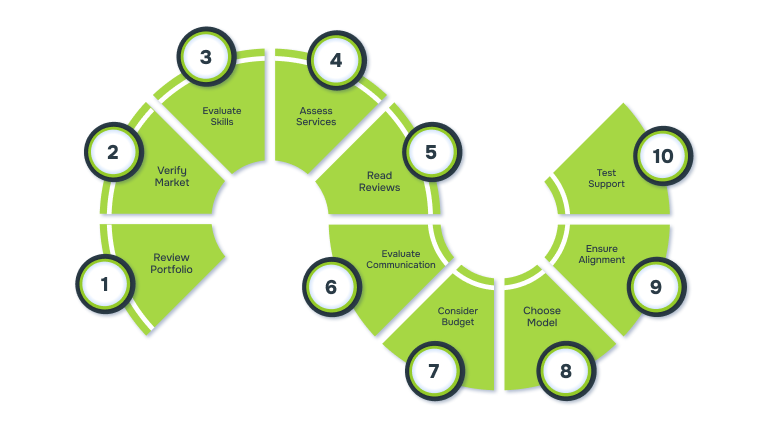
Choosing a website developer isn’t about picking the cheapest option or the flashiest portfolio. It’s about understanding which developer can deliver a site that meets your business needs, avoids costly mistakes, and grows with your goals. This guide breaks down the essential factors to consider, the steps to evaluate developers effectively, and what to watch for to ensure your investment truly pays off.
1. Review the Developer’s Portfolio
A developer’s portfolio is often the first insight into their abilities. While a beautiful design may catch your eye, it’s more important to see how their past websites perform. Look for diversity in design, functionality, and industries served. Notice whether they have experience building websites similar in scope to your needs.
What to look for in a portfolio:
- Variety of design styles and layouts
- Integration of functional features (e-commerce, forms, interactive elements)
- Experience with projects similar in size and complexity
A strong portfolio demonstrates both creativity and technical competence, which are essential for delivering a website that meets your business objectives.
2. Verify Knowledge of the Market
A website must resonate with its target audience. Developers who understand local market trends, user behaviour, and industry expectations can make informed recommendations about design, site structure, and content.
Here are key areas where market knowledge directly impacts the success of your website:
- Designing user-friendly layouts and intuitive site flow
- Ensuring compliance with accessibility and legal standards
- Optimising the site for audience engagement and conversions
Choosing a developer who understands market expectations reduces risks and helps create a site that converts visitors into customers.
3. Evaluate Technical Skills and Tools
Technical expertise is crucial for a website that performs reliably and securely. Your developer should be skilled in:
- Modern programming languages and frameworks (HTML, CSS, JavaScript, PHP)
- CMS platforms like WordPress, Shopify, or bespoke solutions
- Integration with CRMs, marketing platforms, or payment gateways
- Mobile responsiveness, accessibility optimisation, and security standards
Technical expertise ensures your website is scalable, secure, and ready for future growth. Alberonbuilds sites using modern web technologies, CMS platforms, and smooth integrations with CRMs and payment gateways, creating functional, mobile-responsive, and compliant websites that support long-term business success.
4. Assess Services Offered
Choosing a developer who provides comprehensive, end-to-end services can make a significant difference. When a single partner manages planning, design, development, testing, launch, and ongoing support, it reduces miscommunication, ensures consistency, and helps your website evolve alongside your business. Some developers also offer SEO optimisation, analytics setup, and advice for future improvements, which further enhances the long-term value of your site.
Alberon excels in delivering this full spectrum of services. The team handles custom website and web application development, integration with CRMs, analytics platforms, and e-commerce tools, and provides ongoing maintenance, performance optimisation, and security updates. By partnering with Alberon, businesses gain a seamless, scalable, and future-ready website that aligns with their growth goals.
Get in touch with us to explore how our end-to-end services can support your goals.
5. Read Client Testimonials and Reviews
Past client experiences reveal much about a developer’s reliability, professionalism, and ability to deliver. Independent reviews on platforms like Clutch or Google Reviews, along with case studies, provide insights into project outcomes.
Here are some key aspects to check:
- Problem-solving skills and adherence to deadlines
- Quality of post-launch support
- Communication and collaboration during the project
Testimonials validate claims and give confidence in the developer’s ability to consistently meet expectations.
6. Evaluate Communication and Project Management
Strong communication ensures your vision is accurately translated into the final website. Ask about how frequently you will receive updates, the tools used for project management, and their responsiveness to questions. A developer who communicates clearly and proactively prevents misunderstandings, keeps the project on schedule, and ensures the final product aligns with your goals.
7. Consider Budget and Pricing Transparency
Budget clarity is essential to avoid surprises during development. A transparent developer provides a clear breakdown of costs, including any additional charges for revisions, plugins, or ongoing support.
To help you evaluate pricing effectively, here’s a detailed table outlining the key aspects to confirm before finalising a developer:
| Item | Details to Confirm |
| Scope | What’s included in the quoted price (design, development, testing, deployment, and initial SEO setup) |
| Payment | Milestone-based, hourly, or full upfront; clarify schedule and method |
| Extra Costs | Additional charges for revisions, plugins, third-party tools, or ongoing maintenance |
| Hosting & Domain | Whether hosting, domain registration, or SSL certificates are included or extra |
| Third-party Integrations | Costs for connecting CRM, payment gateways, analytics, or marketing platforms |
| Future Scalability | Fees for adding new features, pages, or redesigns in the future |
| Support & Updates | Whether post-launch support, security updates, or bug fixes are included and for how long |
8. Decide Between Freelancer or Agency
Your project’s scale and complexity will determine whether a freelancer or agency is more suitable. Freelancers can offer flexibility and cost savings for smaller projects, while agencies bring broader expertise, multiple skill sets, and the capacity to handle larger, more complex websites. Consider the scope, budget, and need for ongoing support before making a decision.
9. Ensure Alignment with Your Values
The best partnerships extend beyond skills. Consider whether the developer shares your company’s values and approach to business. Factors like sustainability, inclusivity, and transparency can influence collaboration. A developer who aligns with your ethics is more likely to understand your priorities and deliver a website that truly reflects your brand identity.
10. Test Responsiveness and Support
A website requires ongoing care even after launch. Confirm the developer’s approach to maintenance and support, including response times for urgent issues, regular updates, and troubleshooting.
Support considerations:
- Post-launch maintenance availability
- Response times for urgent issues
- Options for updates and ongoing improvements
Reliable support ensures your website remains secure, functional, and capable of evolving with your business needs.

However, even with a clear process in place, many businesses still fall into avoidable traps. So it’s worth knowing what not to do as well.
Also Read: Complete Guide to Software Development Outsourcing 2025
Top Developer Hiring Mistakes That Can Cost Your Business Big
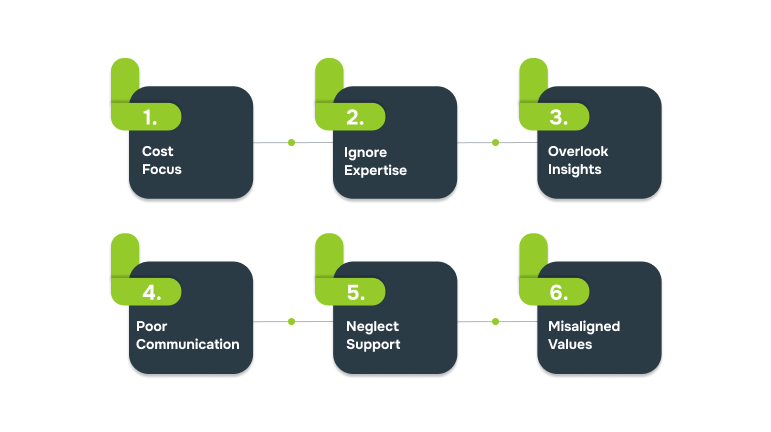
Hiring the wrong website developer can cost time, money, and credibility. Many businesses make similar errors during the selection process, often because they focus on superficial factors rather than long-term outcomes. Here are a few common pitfalls that can help you avoid them and choose a developer who truly supports your goals.
1. Focusing Only on Cost
It’s natural to want to stick to a budget, but prioritising the lowest price can backfire. Cheaper options often compromise on quality, security, or post-launch support, resulting in costly fixes later. Consider the overall value, as quality, experience, and long-term support often outweigh initial cost savings.
2. Overlooking Technical Expertise
A visually appealing website is only part of the equation. Some businesses hire developers without verifying technical skills, which can lead to slow-loading pages, poor mobile responsiveness, or integration issues with payment systems or CRMs. Ask for examples of previous work, check coding standards, and ensure the developer is familiar with the latest web technologies and frameworks.
3. Ignoring Market and User Insights
Developers who don’t understand your target audience may create sites that look good but fail to convert visitors into customers. Local knowledge, such as UK-specific accessibility standards and consumer expectations, plays a key role in designing intuitive and effective websites.
4. Lack of Clear Communication
Poor communication during development leads to misunderstandings, delays, and unsatisfactory outcomes. Some businesses assume developers will understand everything without regular updates or feedback loops. Clarify communication channels, frequency of updates, and project management tools before starting.
5. Not Considering Long-Term Support
Many businesses forget that a website requires maintenance, updates, and troubleshooting. Choosing a developer without a clear support plan can leave you stranded when issues arise after launch. Confirm post-launch support, expected response times, and options for ongoing maintenance or future upgrades.
6. Failing to Align Values and Expectations
Cultural fit, ethics, and work style matter more than many businesses realise. A developer who doesn’t understand your brand or values may deliver a site that misrepresents your business. Review client testimonials, see how challenges are handled, and ensure their approach aligns with your company’s ethos.
Understanding the common mistakes businesses make helps you not only avoid them but also sets the stage for evaluating how well your website developer performs after launch.
How to Track a Developer’s Performance After Your Site Goes Live
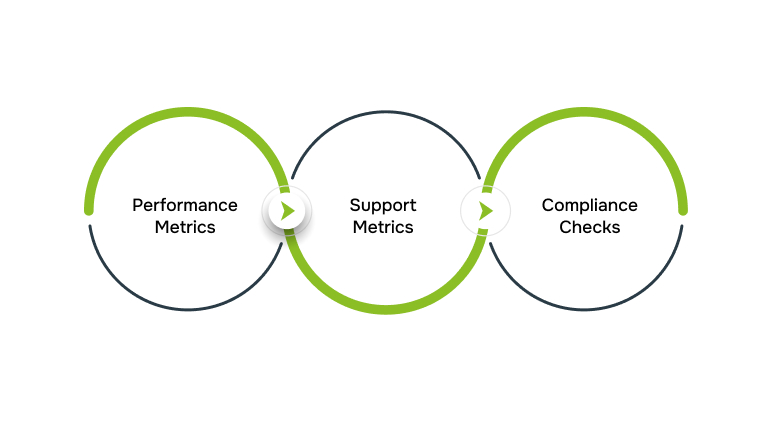
Choosing a website developer doesn’t end when your site goes live. Measuring their success post-launch is crucial to ensure your website meets business goals, delivers a great user experience, and remains scalable and secure over time.
1. Key Performance Indicators (KPIs)
KPIs provide objective measures of how well your website performs. Some essential KPIs include:
- Load speed: Slow websites frustrate users and increase bounce rates. A well-built site should load within 2–3 seconds on both desktop and mobile.
- Bounce rate: A high bounce rate can indicate poor design, confusing site structure, or irrelevant content. Tracking this helps identify areas for improvement.
- Conversion rate: Whether it’s completing a purchase, submitting a form, or signing up for a newsletter, conversions indicate how effectively your site achieves business objectives.
- User engagement: Metrics such as average session duration, page views per session, and interactions with calls-to-action show whether visitors find the site useful and engaging.
Monitoring these KPIs allows you to gauge the effectiveness of the developer’s work and pinpoint areas that may require optimisation.
2. Post-Launch Support and Maintenance Metrics
A developer’s role extends beyond the initial build. Evaluate their performance in terms of:
- Response time: How quickly they resolve bugs or technical issues.
- Uptime monitoring: Ensuring the site remains accessible without downtime.
- Updates and improvements: Frequency of updates, security patches, and feature enhancements.
Consistent support ensures your website remains reliable, secure, and capable of adapting to evolving business needs.
3. Compliance Checks
For businesses, compliance is a critical measure of success. Ensure the site adheres to:
- Accessibility standards (WCAG 2.1): Websites should be usable for people with disabilities.
- Data protection (UK GDPR): Proper handling of user data, clear privacy policies, and secure storage of personal information.
- Industry-specific regulations: Some sectors, such as finance or healthcare, may require additional standards for data management and online transactions.
A developer who prioritises compliance reduces legal risks and ensures your site maintains credibility with customers.
Once you know how to measure success after launch, the next step is partnering with a team like Alberon that can deliver results and provide long-term support.
Also Read: Custom Software Development Services UK
How Alberon Can Help Your Business
Choosing the right website developer is easier with the right partner. Alberon offers end-to-end digital solutions that ensure your website not only looks great but also drives results. Here’s how our services support businesses:
- Custom Software and Web Development: Alberon builds bespoke websites tailored to your business needs, combining design, functionality, and scalability. Our solutions integrate seamlessly with your existing systems to streamline workflows.
- Microsoft Dynamics and 365 Solutions: We help connect your website with CRM, ERP, and other tools to ensure smooth data flow, better customer management, and efficient operations.
- Managed Web Hosting: Reliable, high-performance hosting guarantees faster load times, reduced downtime, and a seamless user experience for your visitors.
- Cybersecurity Training and Solutions: Protects your website and your team from potential threats, ensuring sensitive data and customer information remain secure.
- Microsoft SharePoint Services: Streamlines collaboration, content management, and document workflows, enhancing productivity across your teams.
- Web & Software Support: Continuous monitoring, troubleshooting, and updates keep your site running smoothly and adapt to evolving business needs.
By utilising Alberon’s expertise, businesses can confidently select a website developer, optimise their digital presence, and ensure a long-term, secure, and high-performing online platform.
Schedule a free consultation with Alberon today and get expert guidance on choosing a website developer who will grow with your business.
Conclusion
Most businesses don’t regret investing in a website. They regret choosing the wrong person to build it. A visually polished site that’s slow, confusing to manage, or difficult to update quickly becomes a liability rather than an asset.
That’s why your decision shouldn’t be based on aesthetics or price alone. Focus on how the developer thinks, how they communicate, and how well they plan for life after launch. The real value of a website isn’t in the build. It’s in how reliably it performs months and years later.
Working with a developer like Alberon, who combines technical expertise with long-term support and scalability, ensures your website becomes a true business asset rather than a recurring problem.
Contact Alberon todayto create a website that’s secure, scalable, and built to support your business growth for years to come.
Frequently Asked Questions
Q. How much does a website cost in the UK?
A. Website costs vary widely depending on scope. Simple brochure sites can start in the low hundreds to a few thousand pounds, while custom or e-commerce sites commonly range from roughly £1,000–£10,000+ for small to mid projects; complex platforms or bespoke builds can cost more. Use these ranges to set realistic expectations and always ask for a clear breakdown of what is included.
Q. How long does it take to build a website?
A. Timelines depend on complexity. Small sites can be launched in a few weeks, while typical small-to-medium business projects commonly take 4–12 weeks; full bespoke builds often span several months, including discovery, design, build and testing. Agree milestones up front and factor time for client reviews and content.
Q. What are the essential questions to ask a developer before hiring?
A. Focus on process and outcomes, not just price or visuals. Key questions include: What platforms do you build on? Can we edit the site ourselves and will we retain ownership? What’s included in your quote and payment schedule? What post-launch support do you provide? Also ask for relevant case studies and references. These topics repeatedly top SERP guidance for hiring decisions.
Q. Do I need a UK-based developer to comply with GDPR?
A. You do not strictly need a UK-based developer to comply with UK GDPR, but whoever builds your site must implement privacy-by-design, correct data processing, cookie consent, and secure data handling. If your provider is outside the UK, make sure they understand UK GDPR obligations and how your site will store/process personal data.
Q. Should I hire a freelancer or an agency?
A. Pick based on scope and risk. Freelancers can be cost-effective and flexible for small, well-scoped work. Agencies suit larger or ongoing projects because they offer multiple skills, project management and continuity. Consider long-term maintenance needs and who will cover support if the freelancer is unavailable.
Q. What post-launch support should I expect from a developer?
A. Expect at minimum a short warranty period for bug fixes, options for ongoing maintenance (security patches, backups, uptime monitoring), and a clear SLA for response times. Also confirm who manages hosting, software/plugin updates and how future feature work is quoted. Good hosting and maintenance reduce downtime and security risk.
Ready to Improve your Business Productivity
Get a trusted partner to navigate your digital transformation. With Alberon, you can ensure a smooth transition, clear communication, and peace of mind.