
From Idea to Demo in Minutes: AI-Powered Prototyping for Development Teams
Learn how AI rapid prototyping helps development teams create quick software demos, validate ideas faster, and support sales teams with interactive proof-of-concept applications.
Want to make your Microsoft 365 work harder for your business?
and we’ll tailor a solution that’s just right for you.
Getting a software idea across to a client or stakeholder has always been one of the harder parts of the development process. Describing what something will look like rarely lands the same way as showing it. That gap between concept and visualisation is exactly where AI prototyping tools are starting to make a real difference.
At Alberon, we work with development teams and businesses who need to move quickly, communicate clearly, and make confident decisions before committing to a full build. This post looks at how AI prototyping fits into that picture, what it can realistically do today, and where its limits lie.
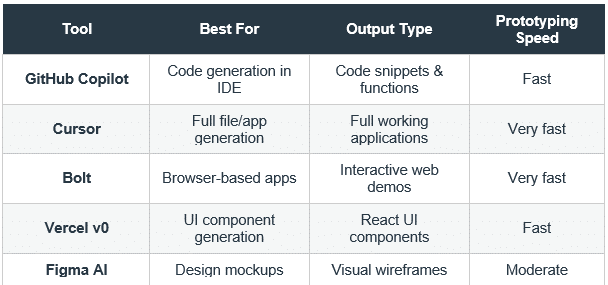
What Can AI Prototyping Tools Actually Do Today
For prototyping purposes, this means you can:
- Generate a rough UI layout for a web application within minutes
- Create clickable mockups that demonstrate a user journey
- Build simple forms, dashboards, or data displays without writing everything from scratch
- Iterate quickly on the look and feel before a single line of production code is written
The outputs are rough around the edges, but that is rather the point. The goal is speed and visualisation, not polish.
Fast and Rough: The Case for Sales Demos
One of the most practical applications of AI prototyping is in sales and client conversations. Imagine your sales team is sitting in a meeting with a prospective client who has a rough idea for an internal tool. Rather than promising to come back with designs in a fortnight, a developer or technical lead can open a laptop, describe the concept to an AI tool, and have a clickable interface on screen before the meeting ends.
That kind of moment changes the dynamic of a sales conversation entirely. Clients can see something tangible, point to what they like, flag what does not feel right, and leave the meeting with a far clearer picture of what they are commissioning. For the development team, it shortens the feedback loop dramatically and reduces the risk of building in the wrong direction.
This approach works particularly well when:
- You need internal sign-off and words alone are not convincing enough
- A client is not yet sure what they want and needs to see options
- You are pitching a bespoke solution and want to stand out from competitors
- The project scope is still being defined and a visual anchor would help
Where AI Prototyping Is Most Useful
Beyond sales, there are a few other scenarios where rapid AI prototyping genuinely earns its place in the development process.
Proof of Concept Builds
When a team wants to test whether a technical approach is viable before committing to it, a quick AI-generated prototype can surface obvious problems or validate assumptions in a fraction of the time a traditional spike would take.
Internal Idea Testing
Product managers and developers can use AI tools to quickly visualise internal tool ideas before putting them to a wider team. Rather than spending time writing detailed specifications for something that might not fly, a rough prototype lets people react to something real.
Discovery and Requirements Gathering
In discovery workshops, showing a rough interface can help non-technical stakeholders articulate their requirements far more precisely than abstract conversations allow. It gives everyone a shared reference point.
Understanding the Limitations
It is worth being clear-eyed about where AI prototyping falls short, because the limitations are significant.
Not Production Ready
AI-generated code is built for speed, not sustainability. It will often lack proper error handling, accessibility considerations, performance optimisation, and the kind of architectural thinking that a production codebase requires. Treating a prototype as a starting point for a live application is a path towards technical debt and future pain.
Security Concerns
AI tools do not write with security as a priority. Input validation, authentication, data handling, and protection against common vulnerabilities are areas where generated code regularly falls short. A prototype shown in a sales meeting is fine. The same code pushed anywhere near real user data is not.
Code Quality
Generated code can be inconsistent, repetitive, and difficult to maintain. It may work well enough to demonstrate a concept but would require substantial refactoring before it could be considered part of a professional codebase. Experienced developers reviewing AI output will often find it quicker to rewrite key sections than to untangle what has been produced.
The Right Way to Think About AI Prototyping
AI prototyping is a communication and exploration tool, not a development shortcut. It is most valuable when it helps people see, react, and decide, before a skilled development team gets to work building something properly.
The teams getting the most out of it are those who use it deliberately: to open up conversations, sharpen requirements, and reduce the cost of early-stage uncertainty. They are not using it to skip the hard work of proper software development. They are using it to make that work more focused and better informed.
If your team is exploring how AI tools might improve your development process, or if you want to have a conversation about how rapid prototyping could support your next project, we would be happy to talk it through.

Ready to Improve your Business Productivity
Get a trusted partner to navigate your digital transformation. With Alberon, you can ensure a smooth transition, clear communication, and peace of mind.