
Bespoke Application Development: A Complete Guide
Discover how bespoke application development increases efficiency and long-term value, offering tailored solutions built around your business needs.
Want to make your Microsoft 365 work harder for your business?
and we’ll tailor a solution that’s just right for you.
In 2024, the UK custom software development market was valued at approximately £1.93 billion and is projected to reach £5.80 billion by 2030, growing at a compound annual growth rate (CAGR) of 20.2%. This rapid expansion highlights a significant shift towards tailored software solutions.
Off-the-shelf software often falls short in meeting the specific needs of modern enterprises, leading to inefficiencies and missed opportunities. For small to medium-sized businesses and mid to large enterprises dealing with legacy systems, bespoke software offers a smart alternative.
This blog will explore the benefits and value of bespoke application development, shedding light on the development process, key considerations when deciding whether bespoke software is the right choice, and how it compares to off-the-shelf solutions in terms of cost, flexibility, and long-term value.
At a Glance
- Higher ROI with Bespoke Software: Bespoke applications have higher upfront costs but eliminate recurring licensing fees, offering a stronger ROI as they improve operational efficiency.
- Scalability and Adaptability: Custom software is ideal for businesses anticipating growth or changing needs, as it evolves with your organisation.
- Perfect Fit for Specialized Processes: Bespoke applications ensure technology aligns with your business operations, boosting productivity and user adoption.
- Enhanced Security and Compliance: Custom software allows for tailored security controls and compliance measures, such as GDPR, reducing vulnerabilities and ensuring data protection.
What Is a Bespoke Application?
Bespoke application development refers to the process of creating custom-built software solutions tailored to meet the unique needs of a business or organisation. Unlike off-the-shelf software, which is mass-produced for a broad audience, a bespoke application is designed from scratch, with features and functionality specifically crafted to align with a business’s workflows, goals, and challenges.
In essence, bespoke applications are “made-to-order” solutions, developed through in-depth collaboration between the business and the development team. This process ensures that the software integrates seamlessly into existing operations, enhancing efficiency and providing a perfect fit for the company’s requirements.
Examples of Bespoke Applications:
- Custom CRM Systems: Tailored customer relationship management software that integrates with specific sales processes.
- E-commerce Platforms: Online stores with features designed to suit the unique needs of a retailer, such as custom product catalogues, payment systems, or inventory management tools.
- Inventory Management Systems: Custom-built solutions for businesses with complex inventory tracking requirements, ensuring precise control and reporting.
Many IT leaders start with off-the-shelf tools for convenience, only to face integration limits and inefficiencies later. Comparing both models now will help you assess which one better supports long-term scalability.
What Makes Bespoke Applications Different from Off-the-Shelf Solutions?
When evaluating software for business automation or process management, organisations typically face the choice between bespoke applications and off-the-shelf software (COTS). Understanding the key differences between these options can help businesses make informed decisions that align with their goals and needs.
Off-the-shelf software, also known as COTS, is a ready-made software solution designed for mass-market use. These products are created with a broad audience in mind, featuring a set of functionalities intended to meet the common needs of various industries.
Examples include widely-used applications like Microsoft Office, CRM systems like Salesforce, or accounting software like QuickBooks.
The primary appeal of COTS software is its affordability and quick deployment. However, the trade-off is that it often doesn’t fit the specific needs of every business. It tends to have extra features that may not be needed and may lack the specific functionality required by some organisations.
Key Differences: Bespoke vs. Off-the-Shelf
| Feature | Bespoke Software | Off-the-Shelf Software |
| Definition | Tailor-made software developed specifically to meet the unique needs and processes of a particular organisation. | Pre-built software solutions designed for the mass market, offering generic functionalities that aim to serve a broad audience. |
| Cost | Higher initial development cost due to customisation; however, it leads to long-term savings by eliminating licensing fees. | Lower upfront costs; however, may incur ongoing subscription or licensing fees, as well as additional costs for customisation or integration. |
| Implementation Time | Longer deployment time as the software is developed from scratch, involving detailed planning, coding, testing, and deployment phases. | Quicker to deploy as the software is ready-made; installation and setup are generally straightforward. |
| Customisation | Highly customisable to fit specific business processes, workflows, and user requirements. | Limited customisation; offers configuration options within predefined functionalities. |
| Scalability | Designed with scalability in mind, allowing for growth and adaptation as business needs evolve. | Scalability may be constrained; it may require additional modules or upgrades to accommodate growth. |
| User Experience (UX) | Custom-designed UX tailored to user needs; potentially higher adoption rates. | Standardised UX; may require user adaptation to fit specific workflows. |
| Integration | Seamlessly integrates with existing internal systems and databases, ensuring smooth data flow and operational continuity. | May face challenges in integration with existing systems. |
| Ownership | Full ownership and control over the software, including source code, enabling unrestricted modifications and updates. | Licenced use, the vendor retains ownership and control over updates, features, and future developments. |
| Support & Maintenance | Dedicated support tailored to the organisation’s specific needs; maintenance can be customised and prioritised. | Standardised support, updates and maintenance are managed by the vendor, which may not align with the organisation’s specific requirements. |
| Security | Enhanced security measures tailored to the organisation’s specific threats and vulnerabilities; compliance with industry standards can be integrated. | General security features may not address specific organisational security needs or compliance requirements. |
| Competitive Advantage | Provides a unique solution that can offer a competitive advantage by aligning closely with business objectives and processes. | Features are available to all users; less opportunity for differentiation. |
Once you recognise these differences, the real question becomes, what tangible business outcomes can bespoke applications deliver? Let’s look at how they create measurable value across efficiency, security, and growth.
Off-the-shelf solutions often fall short for businesses that need scalable, custom software tailored to their unique operations. Alberon specialises in bespoke software development that prioritises flexibility, smooth integration, and long-term value, helping you stay ahead.
Benefits of Bespoke Application Development
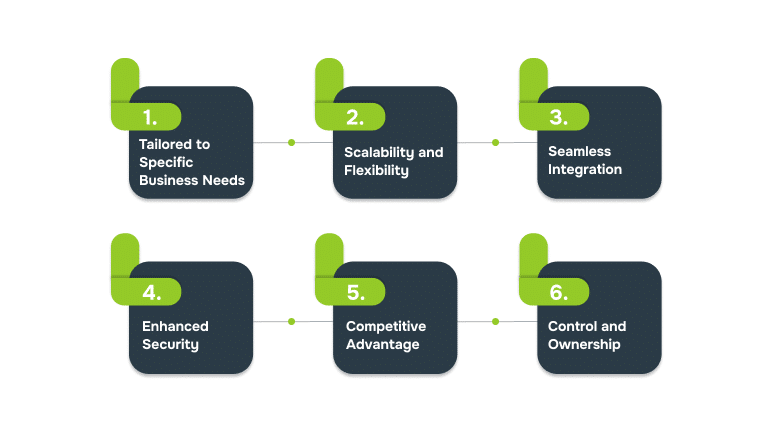
Bespoke application development provides businesses with numerous advantages, especially when compared to off-the-shelf software. By offering a tailor-made solution, bespoke software addresses unique business needs and challenges, resulting in significant long-term value. Below are the key benefits that businesses can achieve by opting for bespoke application development:
1. Tailored to Specific Business Needs
Bespoke software is customised to fit the precise requirements of a business, ensuring every feature aligns with organisational goals and eliminates unnecessary complexity. Unlike generic tools, it focuses only on what’s essential, delivering personalised functionality that supports specific workflows, tasks, and objectives while improving productivity and cost efficiency.
2. Scalability and Flexibility
As operations expand or requirements evolve, the software can be easily modified or upgraded without expensive overhauls. This flexibility allows companies to adapt quickly to market changes, handle increased data volumes or user demands, and future-proof their technology investments.
3. Seamless Integration with Existing Systems
Bespoke applications are designed to integrate effortlessly with your existing systems and databases, ensuring smooth workflows and uninterrupted operations. By enabling systems to communicate effectively, businesses can reduce manual processes, eliminate data silos, and maintain operational continuity.
4. Enhanced Security
Security is a critical concern. According to the 2024 IBM Cost of a Data Breach Report, the average cost of a data breach in 2024 was $4.88 million. Bespoke applications offer stronger, tailored security measures and can be designed to comply with industry regulations, like GDPR and AML/KYC.
5. Competitive Advantage
Bespoke software enables businesses to differentiate themselves by offering unique features and a superior user experience. These custom-built applications solve specific pain points competitors may still struggle with using standard solutions, helping your brand innovate faster, operate smarter, and create added value for both customers and employees.
6. Control and Ownership
With bespoke software, your organisation retains complete ownership and control over the application, its codebase, and its future development. This independence removes vendor lock-in, allowing full flexibility to update, modify, or expand functionalities as needed.
Seeing the benefits is one thing, knowing how they’re achieved is another. Understanding the bespoke development process helps ensure your investment aligns with timelines, resources, and business goals.
Suggested Read: How Custom Software Integration Enhances Business Operations
Understanding the Bespoke Application Development Process
Bespoke applications are crafted to align precisely with an organisation’s specific needs, workflows, and objectives. This bespoke approach ensures that the final product is not only functional but also optimised for the unique operational environment of the business.
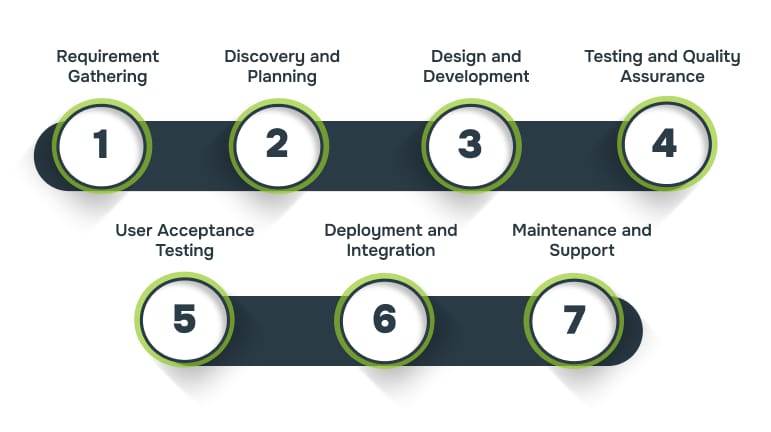
The process is structured in several phases to ensure the final product aligns perfectly with business objectives and provides maximum value. Here’s an overview of the typical process.
1. Consultation and Requirement Gathering
The process begins with in-depth consultations between the business and the development team to define the project scope, objectives, and challenges.
Key stakeholders from various departments are engaged to gather insights, and all requirements are documented clearly to ensure the project is well-defined from the start. An initial proposal outlining the project scope, costs, and timeline is then provided.
2. Discovery and Planning
This phase focuses on research and detailed planning. A comprehensive Software Requirements Specification (SRS) document is created to outline the necessary features and functionalities.
The software architecture is designed to ensure scalability and integration with existing systems, while wireframes or prototypes are built to visualise the user interface and user experience.
3. Design and Development
Once planning is complete, the development team begins creating the application based on the agreed specifications. The user interface (UI) is crafted to ensure a user-friendly experience, while the core functionality and business logic are implemented through coding and programming. Agile development methods are used to iterate and refine the application continuously, ensuring it meets business needs effectively.
4. Testing and Quality Assurance
Quality assurance is crucial to ensure the software is reliable and performs as expected. Types of Testing: Unit testing, integration testing, system testing, and user acceptance testing (UAT) are carried out.
- Functional Testing: Verifying that all features work as intended.
- Non-Functional Testing: Checking security, performance, and scalability.
- Bug Fixing: Identifying and resolving issues found during testing.
5. User Acceptance Testing (UAT)
After development and testing, the business performs a final validation of the software in a real-world context. Stakeholders test the application to ensure it meets the business requirements, and any necessary adjustments are made based on their feedback before the final release.
6. Deployment and Integration
During this phase, the software is installed and configured on production servers, ensuring it integrates smoothly with existing systems and databases. System integration is crucial for maintaining data continuity and optimising operations. End-users receive training to ensure they can use the new system effectively.
7. Maintenance and Support
Post-deployment, the application enters the maintenance phase, where it is continuously monitored and updated. Ongoing support is provided to resolve any issues and adapt the software to evolving business needs. Regular updates, patches, and enhancements are applied to maintain the software’s performance and security over time.
Every transformation project requires a clear financial picture. At this stage, it’s important to understand the cost factors behind bespoke development and how they translate into long-term ROI.
How Much Does Bespoke Software Development Cost?
The cost of bespoke software development in the UK varies significantly based on factors such as project complexity, required features, and the development team’s expertise. Here’s a breakdown to help you understand potential costs:
| Project Type | Estimated Cost Range | Description |
| Startup MVP / Proof of Concept | £5,000 – £30,000 | Basic applications to test market viability with core functionalities. |
| Small Business Applications | £25,000 – £120,000 | Internal tools, CRM systems, booking platforms, and other custom solutions. |
| Medium-Scale Projects | £20,000 – £80,000 | Mobile apps, customer portals, or internal management systems. |
| Enterprise Solutions | £80,000 – £500,000+ | Comprehensive systems like ERP, SaaS platforms, or applications with advanced features. |
Factors Influencing Development Costs
Several elements can impact the overall cost of bespoke software development:
- Project Complexity: More intricate applications with advanced functionalities or integrations tend to increase development time and cost.
- Technology Stack: The choice of programming languages, frameworks, and tools can affect both development time and licensing fees.
- Team Expertise: Highly skilled developers or specialised agencies may command higher rates but can deliver more robust and efficient solutions.
- Design Requirements: Custom user interfaces and user experiences require additional design and testing efforts, contributing to higher costs.
- Maintenance and Support: Ongoing maintenance, updates, and support services are essential for ensuring the software remains functional and secure post-deployment.
Budgets and plans are easier to justify with evidence. Real-world examples show how organisations like yours are already utilising bespoke software to improve performance and profitability.
Real-World Examples of Bespoke Applications
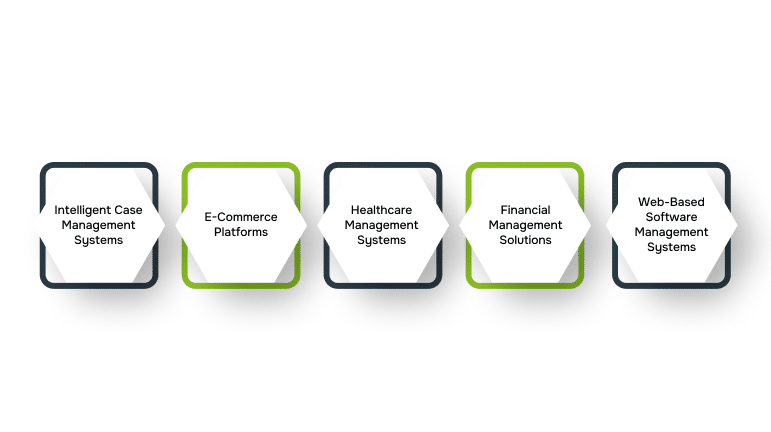
Bespoke applications are used across various industries to solve unique business challenges. By providing tailored solutions, businesses can streamline operations, improve efficiency, and enhance customer satisfaction. Here are a few real-world examples of bespoke applications:
1. Intelligent Case Management Systems
In the legal and service industries, bespoke case management software can significantly improve efficiency and decision-making.
- Example: A client in the legal sector implemented an intelligent case management system. The solution integrates with existing workflows and manages thousands of cases with real-time updates and automated reporting.
- Results: Alberon developed a bespoke system that has improved operational efficiency by 40%, reduced case processing time by 30%, and ensured better resource allocation. The firm now manages more than 5,000 cases annually with a high degree of accuracy and speed.
2. E-Commerce Platforms
Many businesses opt for bespoke e-commerce platforms to meet specific needs that off-the-shelf solutions cannot address.
- Example: A luxury retailer may need a bespoke e-commerce platform that allows for a high level of personalisation, custom product options, and integration with a specific payment gateway.
3. Healthcare Management Systems
In the healthcare industry, bespoke software can help manage patient data, optimise scheduling, ensure compliance with HIPAA, and improve communication between departments.
- Example: A private hospital creates a bespoke patient management system to track patient records, appointment scheduling, and medical histories, integrating with billing and insurance systems.
4. Financial Management Solutions
Bespoke software is often used by financial institutions to manage transactions, track investments, and analyse financial data in real-time.
- Example: A financial consultancy develops a bespoke risk management system to assess and track investments, while integrating real-time market data feeds and advanced analytics.
5. Web-Based Software Management Systems
For companies seeking to optimize operations and enhance accessibility, a web-based software management system provides a custom, scalable solution.
- Example: A client in the engineering sector sought a web-based management system to oversee project management, resource allocation, and financial tracking.
- Results: Alberon’s bespoke system enabled the company to cut down project delays by 25% and improve project cost accuracy by 20%. The solution has helped the company scale operations to manage 50+ large-scale projects simultaneously.
These success stories are inspiring, but the right solution depends on your context. Let’s walk through key decision factors to determine if bespoke software aligns with your goals.
How to Determine if Bespoke Application Development is Right for Your Business?
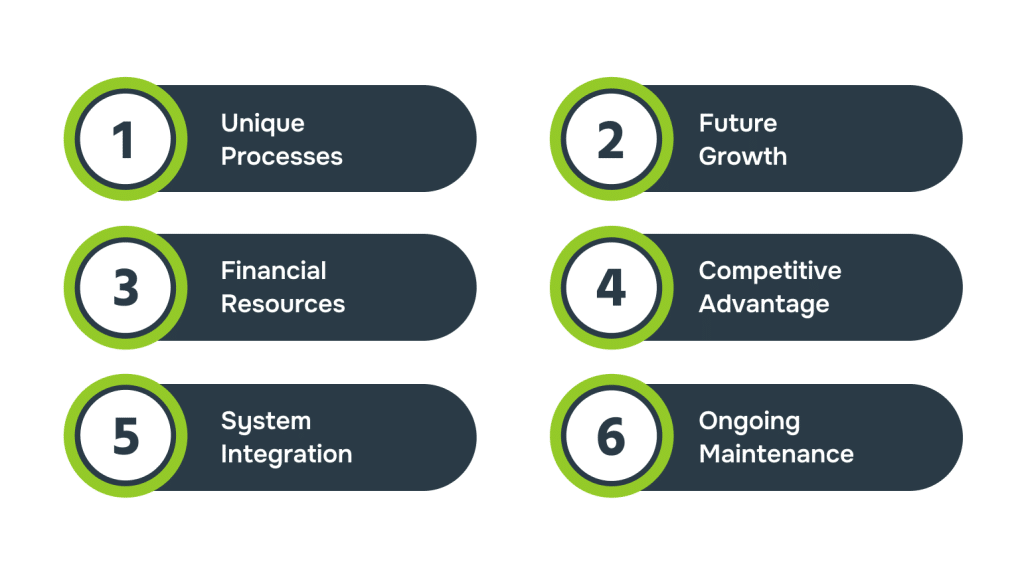
Choosing bespoke application development is a significant decision that requires careful consideration of your business needs, resources, and long-term goals. While custom-built software offers distinct advantages, it may not be the right fit for every organisation.
To determine if bespoke software is the right choice, consider the following key questions and their implications:
1. Does Your Business Have Unique Processes or Requirements?
If the answer is “Yes”, bespoke software is likely a good fit. It allows for customisation to fit your specific operational needs, ensuring better efficiency and eliminating unnecessary features.
2. Are You Planning for Future Growth or Scaling?
Bespoke software is scalable and can grow with your business. If you anticipate expanding your operations, bespoke solutions provide the flexibility to accommodate future needs without costly overhauls.
3. Do You Have the Financial Resources for Custom Development?
Bespoke software requires a higher initial investment, but its long-term benefits can outweigh the cost. If your business has the financial resources and is committed to the long-term benefits of custom software, bespoke development could provide significant value. Be sure to factor in both development and ongoing support costs when making your decision.
4. Will a Bespoke Application Provide a Competitive Advantage?
Custom software can offer unique features and a superior user experience, helping your business stand out from competitors. If differentiation is a priority, bespoke development can provide a strategic edge.
5. Do You Need Seamless Integration with Existing Systems?
Bespoke software can integrate smoothly with your current systems, streamlining workflows and eliminating inefficiencies. If integration is critical, custom software is the ideal solution.
6. Are You Prepared for Ongoing Maintenance and Support?
Bespoke software requires ongoing maintenance to ensure it remains effective and secure. This includes software updates, bug fixes, and adapting the application to new needs.
If you can provide ongoing support for bespoke software, either in-house or through an external partner, the custom solution will likely be a good fit. Be sure to factor in the commitment to long-term maintenance before moving forward.
If you’re considering a custom solution, partnering with a developer that understands your systems and vision is crucial. Here’s how Alberon helps businesses like yours turn bespoke software into a competitive advantage.
How Alberon’s Bespoke Solutions Enhance Your Business Efficiency
At Alberon, we specialise in creating bespoke applications that are not only tailored to your unique business needs but also seamlessly integrate with your existing systems. By utilising custom software solutions, we help businesses optimise operations, enhance scalability, and improve overall efficiency. Whether you need a custom CRM, ERP, or cloud-based tools, Alberon provides:
Alberon’s Bespoke Application Development Features
- Custom Business Applications: Alberon specialises in developing custom business applications that automate processes and improve efficiency.
- Custom Software Integration: Alberon enhances business operations by integrating custom software solutions that automate tasks, streamline operations, and improve user experiences.
- Microsoft 365 Customisation: Alberon tailors Microsoft 365 applications, such as Teams, SharePoint, and OneDrive, to fit specific business workflows, optimising collaboration and productivity.
- Cloud-Based IT Services: We provide cloud-based IT services and solutions, including CRM and ERP tools, to support business scalability and flexibility.
- Case Management Systems: Alberon has developed intelligent case management systems with features like volunteer matching, mobile accessibility, integrated communications, and secure digital forms.
Conclusion
Bespoke application development provides businesses with a powerful way to gain a competitive advantage, optimise operations, and meet their specific needs with precision.
While the initial investment and development time may be higher than off-the-shelf alternatives, the long-term benefits often outweigh these challenges, making it a worthwhile investment for many organisations.
At Alberon, we specialise in developing and integrating bespoke software solutions that are built around your unique needs, helping you connect systems, eliminate inefficiencies, and future-proof your business.
Simplify workflows with smart bespoke software solutions. Contact us today.
FAQs
1. Is Bespoke Software Expensive?
Yes, bespoke software typically requires a higher initial investment than off-the-shelf solutions. However, the long-term benefits, such as increased operational efficiency, scalability, and the ability to adapt to business changes, often justify the higher upfront cost.
2. How Long Does It Take to Develop Bespoke Software?
The timeline for bespoke software development varies depending on the complexity and scope of the project. Simple applications may take a few months, while more complex solutions can take 6–12 months or longer.
3. Will Bespoke Software Integrate with My Existing Systems?
Yes, bespoke software is designed to integrate seamlessly with your existing systems, ensuring smooth data flow and reducing inefficiencies. Whether integrating with ERP, CRM, or other business tools, bespoke solutions can be developed to ensure compatibility with your current infrastructure.
4. How Secure is Bespoke Software?
Bespoke software offers a higher level of security compared to off-the-shelf solutions. It can be designed with specific security protocols tailored to your business needs, such as data encryption, multi-factor authentication, and compliance with industry regulations (e.g., GDPR).
Ready to Improve your Business Productivity
Get a trusted partner to navigate your digital transformation. With Alberon, you can ensure a smooth transition, clear communication, and peace of mind.