Customised IT Solutions for Businesses: Ultimate 2025 Guide
Discover how customised IT solutions for businesses in the UK streamline operations, enhance security, and drive growth. Explore how your business can benefit.
Want to make your Microsoft 365 work harder for your business?
and we’ll tailor a solution that’s just right for you.
Technology is supposed to make business easier. Yet for many IT leaders across the UK, it often feels like the opposite. Systems that were once reliable are now slowing teams down. Security tools work in isolation. Legacy platforms refuse to integrate with newer ones. And every “simple fix” turns into another costly workaround.
It’s not just an inconvenience. It’s a risk. A recent government survey revealed that 74% of large UK businessesexperienced cyber breaches or attacks in the past year, showing how exposed organisations really are. Incidents like the Capita cyberattack in 2023, which resulted in millions of compromised records and a £14 million fine, make one thing clear: outdated or disjointed IT is no longer just inefficient. It’s a liability.
That’s why many businesses are moving away from generic, one-size-fits-all software and instead turning to customised IT solutions that are built around their exact workflows, infrastructure and security requirements. When technology truly aligns with the organisation, everything changes. Operations become smoother, decision-making becomes faster, and innovation is no longer held back by clunky tools.
This blog explores seven proven customised IT strategies that UK businesses are already using to regain control of their infrastructure, not by spending more but by building smarter.
Top Insights:
- Tailor IT Solutions to Your Business Goals: Customised IT solutions should be designed to align with your organisation’s workflows, objectives, and growth plans, ensuring technology supports your business effectively.
- Follow a Structured Implementation Process: A clear step-by-step approach, from discovery and planning to development, testing, deployment, and optimisation, helps reduce risks and ensures smooth adoption across teams.
- Address Operational Challenges Efficiently: Bespoke solutions tackle issues such as legacy systems, inefficient workflows, data silos, and security gaps, improving overall business productivity.
- Ensure Long-Term Value and Scalability: Continuous maintenance, updates, and system optimisation keep your IT infrastructure future-proof, efficient, and ready to support evolving business needs.
Custom IT vs Off-the-Shelf Software: Which Works Better for UK Businesses?
UK businesses often struggle with systems that either lack essential features or come overloaded with functions they never use. This creates a real dilemma: settle for generic software or invest in something smarter? Let’s break down how both approaches stack up in terms of cost, flexibility, support, and long-term ROI.
| Feature | Off-the-Shelf Solutions | Customised IT Solutions |
| Flexibility | Limited; designed for a broad audience | Fully tailored to business workflows |
| Integration | May not integrate smoothly with existing systems | Built to work seamlessly with current tools and databases |
| Scalability | Can be restrictive as the business grows | Designed to scale alongside business expansion |
| Security & Compliance | Generic security features may not meet industry regulations | Custom security protocols aligned with industry regulations |
| Cost Efficiency | Lower upfront cost, but potential hidden long-term costs | Higher initial investment, but reduces operational inefficiencies and future adaptation costs |
By comparing the two, it becomes clear that customised IT solutions provide a strategic advantage. Rather than adapting your business processes to fit generic software, these solutions are designed to support growth, improve compliance, and streamline operations, making technology a real enabler, not a constraint.
To understand why customised IT solutions are often the better choice for businesses, it’s important to explore the tangible benefits they bring.
Also Read: How Custom Software Integration Enhances Business Operations
Why Custom IT Solutions Deliver Real Business Gains
Customised IT solutions are not just a technology upgrade; they directly affect how your teams work, how decisions are made and how your business stays at the top. Many organisations struggle with disconnected systems and inefficient workflows, which can be frustrating and slow down growth. Tailored IT solutions address these challenges, turning technology from a bottleneck into a strategic enabler.
Here’s how bespoke IT solutions can transform your business, improve efficiency and create measurable results for UK organisations.
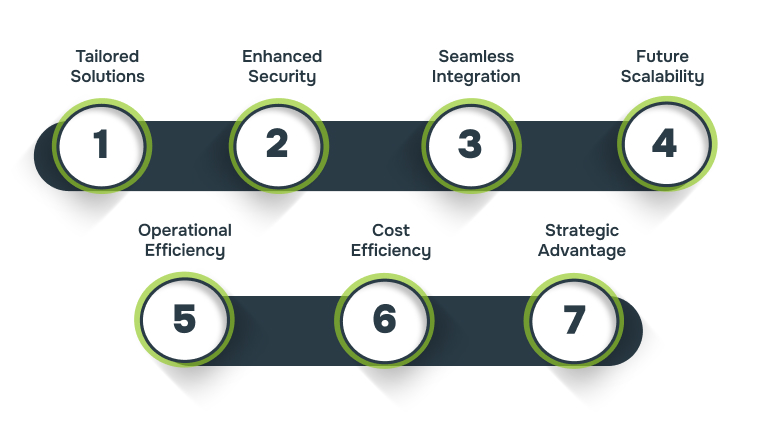
1- Tailored to Your Business Needs
Customised IT solutions are built around your specific workflows, goals, and processes. Unlike generic software, they adapt to how your teams actually operate, reducing inefficiencies and eliminating unnecessary features that don’t serve your business.
2- Enhanced Security and Compliance
With increasing data breaches and stricter UK regulations like GDPR, security cannot be an afterthought. Custom solutions allow businesses to implement robust security protocols and ensure compliance with industry-specific regulations, reducing risk and protecting sensitive information.
3- Seamless Integration with Existing Systems
Many businesses struggle with multiple disconnected tools. Customised solutions can integrate smoothly with your current systems, centralising data and enabling teams to work more efficiently without the friction of manual processes.
4- Scalability for Future Growth
As your business grows, your IT systems need to keep pace. Bespoke solutions are designed to scale, allowing you to add features, expand capacity, and adapt workflows without major disruptions or costly replacements.
5- Improved Operational Efficiency
By automating repetitive tasks, simplifying processes, and reducing manual errors, custom solutions free up time for your team to focus on high-value activities. This leads to faster decision-making and better overall productivity.
6- Cost-Effective in the Long Run
While the initial investment in customised IT solutions may be higher than off-the-shelf software, the long-term savings are significant. Reduced inefficiencies, fewer integration issues, and lower maintenance costs make it a smart investment over time.
7- Strategic Advantage
Ultimately, customised IT solutions turn technology into a business enabler rather than a constraint. They help you respond quickly to market changes, improve customer experiences, and gain a competitive edge in your industry.
After understanding the benefits and business impact of customised IT solutions, the next step is to explore how these solutions are implemented. A well-structured approach ensures that your IT system is not only tailored to your business needs but also delivered efficiently, securely and with minimal disruption.
Also Read: Managed IT Services: Types, Benefits & Challenges
Step-by-Step Guide to Successfully Implementing Customised IT Solutions
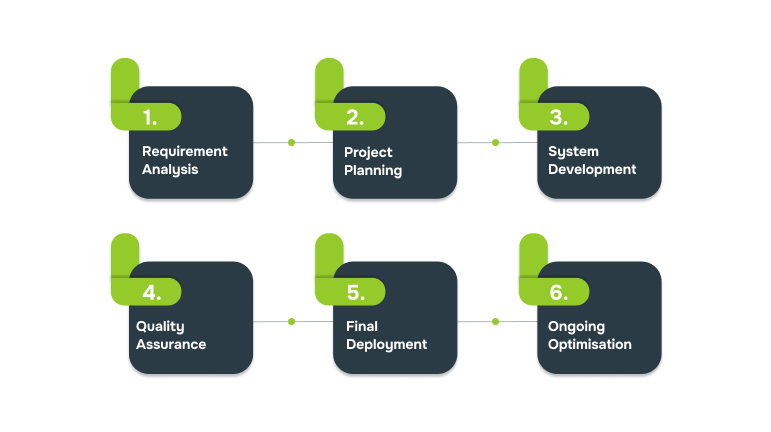
Implementing a customised IT solution is more than installing software; it requires a structured approach that aligns technology with your business goals. Each step reduces risks, ensures smooth adoption, and delivers measurable impact while boosting efficiency, decision-making, collaboration, and future growth. Here’s a step-by-step process to help UK businesses implement customised IT solutions effectively.
1. Discovery & Requirement Analysis
The first step involves gaining a deep understanding of your business operations, objectives and challenges. This includes conducting interviews with key stakeholders, analysing current workflows and identifying gaps or inefficiencies in existing systems. The goal is to clearly define project scope, priorities and technical requirements. By capturing these insights early, businesses can ensure that the final solution addresses real needs rather than assumptions.
2. Planning & Prototyping
Once requirements are gathered, a detailed project roadmap is created. This includes timelines, milestones and resource allocation. Prototyping plays a crucial role in this stage, as interactive mockups allow stakeholders to visualise the solution before full-scale development begins. Feedback from these prototypes helps refine features, ensuring alignment with business objectives and reducing the risk of costly changes later.
3. Development & Integration
In this phase, the bespoke solution is developed according to the approved plan. Developers focus on creating a secure, scalable and user-friendly system that integrates seamlessly with existing tools and databases. Proper integration ensures that data flows smoothly across platforms, eliminates manual duplication and enables teams to work more efficiently. The result is a solution that fits naturally within your business ecosystem.
4. Testing & Quality Assurance
Before deployment, the system undergoes rigorous testing to ensure reliability and performance. Functional testing checks that all features work as intended, while security testing protects against potential threats. Performance testing ensures the solution can handle real-world usage, and user acceptance testing confirms that the system meets stakeholder expectations. This step is essential to minimise post-launch issues and ensure smooth adoption.
5. Deployment & Training
After testing, the solution is deployed across the organisation. Deployment includes migrating data, configuring the system for live use and ensuring minimal disruption to daily operations. Equally important is training employees to use the system effectively. Hands-on workshops and detailed documentation help teams adapt quickly, boosting productivity and ensuring the system is used to its full potential from day one.
Case in Point: For the Intelligent Case Management System, Alberon rolled out the platform for a volunteer service supporting vulnerable individuals. Staff received structured training on real-time rota management, digital referral forms, and secure reporting. This ensured smooth adoption, compliance with legal requirements, and faster response times, demonstrating how tailored IT solutions can be implemented effectively while maximising operational efficiency.
6. Ongoing Support & Optimisation
Implementation does not end at deployment. Continuous monitoring, maintenance and updates are essential to keep the system secure, efficient and aligned with evolving business needs. Feedback is gathered from users to refine workflows, add new features and address emerging challenges. This ongoing optimisation maximises ROI and ensures the solution continues to deliver long-term value.
By following these steps, UK businesses can implement customised IT solutions with confidence, ensuring systems are not only tailored to their needs but also scalable, secure, and poised to drive lasting business success.
After understanding the step-by-step process of implementing customised IT solutions, it’s important to consider the real-world challenges businesses often face and how bespoke solutions address them effectively.
Also Read: Bespoke Software Solutions for Unique Needs UK
How Do Customised IT Solutions Tackle Your Biggest Business Hurdles?
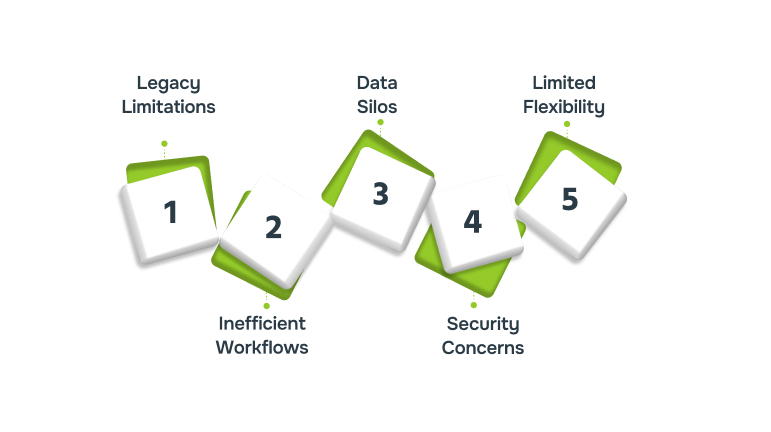
Implementing IT systems is rarely without obstacles. UK businesses frequently encounter issues such as outdated legacy systems, inefficient workflows, data silos, and security concerns. Customised IT solutions are designed to tackle these challenges head-on:
1. Legacy Systems Holding Back Growth
Many organisations rely on outdated software that limits scalability and slows operations. Bespoke solutions modernise these systems, integrating them with current technologies and automating workflows to improve efficiency.
2. Inefficient or Manual Workflows
Manual processes increase errors and consume valuable time. Customised IT solutions automate repetitive tasks, streamline operations, and allow teams to focus on higher-value work.
3. Data Silos and Poor Integration
Disjointed systems prevent seamless data flow and hinder informed decision-making. Bespoke software integrates multiple platforms, providing a unified view of operations and supporting real-time insights.
4. Security and Compliance Concerns
Standard software may not meet specific security or regulatory requirements. Custom solutions are built with robust security protocols and compliance in mind, protecting sensitive business data and ensuring adherence to UK regulations like GDPR.
5. Limited Flexibility for Future Needs
Off-the-shelf solutions often lack adaptability for evolving business requirements. Bespoke IT systems are scalable and flexible, allowing businesses to add features or adjust processes as needs change.
After exploring the common challenges UK businesses face and how customised IT solutions address them, the next crucial step is choosing a trusted partner to ensure these solutions are implemented effectively and deliver long-term value.
Why Choose a Trusted Partner Like Alberon
Selecting the right IT partner can make or break the success of your customised solution. Alberon stands out as a reliable choice for businesses seeking secure, scalable, and fully tailored IT systems. Here’s why:
- Bespoke IT Solutions: Custom systems designed to fit seamlessly with your workflows and business goals. These solutions enhance efficiency, reduce operational friction, and enable teams to work smarter, not harder.
- End-to-End Support: From planning to deployment and ongoing optimisation, complete support ensures smooth adoption, reduces risks, and maximises the ROI of your technology investments.
- Microsoft Dynamics 365 & 365 Optimisation: Integrated platforms provide a unified ecosystem for stronger collaboration, real-time insights, and improved decision-making across departments.
- Cybersecurity & Compliance: Security measures and strict adherence to regulatory standards protect sensitive data, helping organisations maintain trust with clients and partners.
- Cloud Migration & Infrastructure: Secure, scalable cloud solutions support business growth, whether migrating existing systems or building cloud-native applications.
- Data Integration & Analytics: Connecting disparate data sources into a single, actionable view enables smarter decisions, operational optimisation, and a competitive edge in the market.By choosing a partner like Alberon, UK businesses gain more than software; they gain a strategic ally committed to turning technology into a growth enabler while addressing operational challenges efficiently.
Schedule a free consultation with Alberon today to turn your IT challenges into growth opportunities and see how tailored solutions can transform your business operations.
Conclusion
Customised IT solutions offer UK businesses a way to overcome operational inefficiencies, modernise legacy systems, and unlock measurable growth. By aligning technology with your unique workflows, these solutions improve productivity, streamline processes, enhance decision-making, and strengthen security.
Choosing a trusted partner like Alberon ensures that every solution is tailored to your business goals, implemented through a structured process, and supported with ongoing optimisation. With Alberon’s expertise, organisations can confidently transform their IT infrastructure into a strategic asset that drives long-term success.
Discover how Alberon can help your business implement secure, scalable, and fully customised IT solutions. Get in touch today to explore your options and request a demo.
Frequently Asked Questions
1. How long does it take to implement a customised IT solution?
The implementation timeline varies depending on the complexity of the solution and your business requirements. Typically, the process includes stages such as discovery, development, testing, and deployment, which can span several weeks to months. A detailed project plan will be provided to ensure transparency and manage expectations.
2. What is the cost of developing a customised IT solution?
Costs can range from £10,000 to £90,000, influenced by factors like project scope, functionality, and integration needs. It’s advisable to discuss your specific requirements with a provider to receive a tailored quote.
3. Will a customised IT solution integrate with my existing systems?
Yes, a key advantage of customised solutions is their ability to integrate with your current systems, including legacy software and third-party applications. This ensures a unified technology ecosystem, reducing data silos and improving workflow efficiency.
4. Who owns the customised IT solution once it’s developed?
Ownership typically belongs to your business. Customised solutions are developed to meet your specific needs, and upon completion, you retain full rights to the software, allowing for future modifications and scalability.
5. What support is available after deployment?
Reputable providers offer ongoing support and maintenance services to ensure your IT solution remains effective and up-to-date. This includes troubleshooting, updates, and scalability enhancements as your business evolves.
Ready to Improve your Business Productivity
Get a trusted partner to navigate your digital transformation. With Alberon, you can ensure a smooth transition, clear communication, and peace of mind.