Managed IT Services: Types, Benefits & Challenges
Explore the benefits and limitations of managed IT services. Learn how choosing the right provider can optimise your operations and enhance security.
Want to make your Microsoft 365 work harder for your business?
and we’ll tailor a solution that’s just right for you.
Is managing IT services in-house becoming more challenging and costly for your business? As your company grows, the demand for reliable IT management often outpaces internal resources, leading to increased expenses and operational inefficiencies.
The managed IT service market is expected to grow 14.1% from 2025 to 2030, with businesses reducing infrastructure wastage by 35% by outsourcing their IT functions. This reflects the growing need for cost-effective, scalable, and expert-driven IT solutions.
In this blog, you will find out the key benefits of managed IT services and how they can help you reduce costs and enhance efficiency.
Overview
- Managed IT services help businesses outsource IT functions, improving efficiency and security.
- Different pricing models like per-user, per-device, and tiered plans offer flexible options based on business needs.
- These services provide key benefits, such as enhanced security, reduced downtime, and access to expert IT support.
- Challenges include vendor dependency, integration issues, and potential hidden costs, which require careful planning.
- Choosing the right provider involves assessing factors like expertise, scalability, security, and support quality.
What is Managed IT Service and its Purpose?
Managed IT services outsource IT tasks such as network management, cybersecurity, and data backup to third-party experts. This allows you to focus on your core functions while leaving complex IT management to professionals.
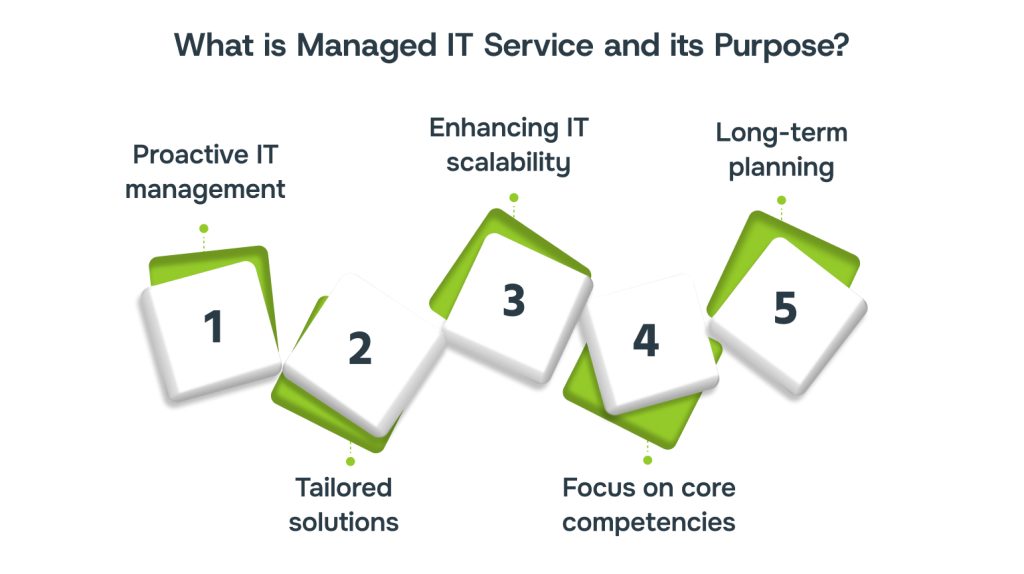
The goal is to ensure business continuity and allow for growth without the burden of in-house IT management. The purpose includes:
- Proactive IT management: Managed IT services ensure that issues are identified and handled before they affect business operations. This approach helps businesses reduce the likelihood of IT failures.
- Tailored solutions: Managed IT providers offer customised solutions that align with the specific requirements of a business. You can work towards growth and strategic goals rather than maintaining operations.
- Enhancing IT scalability: As businesses grow, their IT needs to evolve. Managed IT services provide solutions that adapt to the increasing demands of business operations, offering flexibility for future growth.
- Focus on core competencies: By outsourcing IT services, businesses can redirect resources toward core activities like product development, customer service, and sales.
- Long-term planning: Managed IT services help businesses plan their IT infrastructure for the future, ensuring that technology aligns with business goals.
Managed IT services offer tailored solutions and proactive support to reduce risks and improve efficiency. Understanding the types of managed IT services available will help you choose the right ones to meet your business goals.

What are the Different Managed IT Services?
Managing IT services internally can result in high costs, inefficiencies, and gaps in expertise. Outsourcing these functions through managed IT services allows businesses to access specialist skills and reduce operational risks without investing in an in-house team.
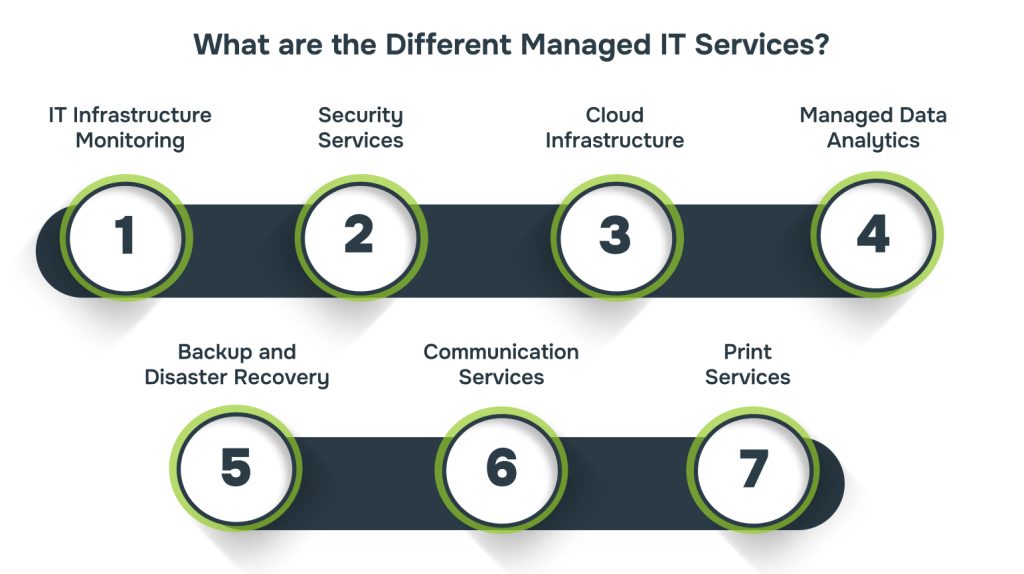
Here’s a breakdown of the key managed IT services businesses rely on:
- IT Infrastructure Monitoring: Monitoring networks and systems to detect issues before they cause downtime. This ensures that your IT infrastructure remains stable and functional without constant internal oversight.
- Security Services: Protecting your business from cyber threats, malware, and data breaches by implementing advanced security protocols and tools. Managed security services also ensure compliance with regulations like GDPR.
- Cloud Infrastructure: Hosting and managing cloud resources that provide scalable storage, computing, and networking solutions. Cloud infrastructure helps you expand your operations without the cost of physical hardware.
- Managed Data Analytics: Collecting and analysing business data to provide actionable insights. This service helps you make informed decisions by offering real-time analysis of performance and market trends.
- Backup and Disaster Recovery: Protecting critical data by backing it up securely and setting up recovery plans. In case of a failure, your business can restore operations quickly without losing valuable data.
- Communication Services: Managing communication tools like email, VoIP, and video conferencing to ensure smooth connectivity. This service supports remote work and internal communication without interruptions.
- Print Services: Centralising and managing print resources to reduce operational costs and improve workflow efficiency. Managed print services monitor usage, supplies, and repair needs, ensuring business continuity.
Choosing the right managed IT services is critical to ensuring your business runs smoothly. With Alberon’s expertise in Microsoft 365, we can customise solutions that optimise your workflows and enhance collaboration.
Managed IT services help businesses manage IT infrastructure, security, and data without the need for in-house teams. To choose the right service, it’s important to understand the different pricing models available.
What are the Different Pricing Models for Managed IT Services?
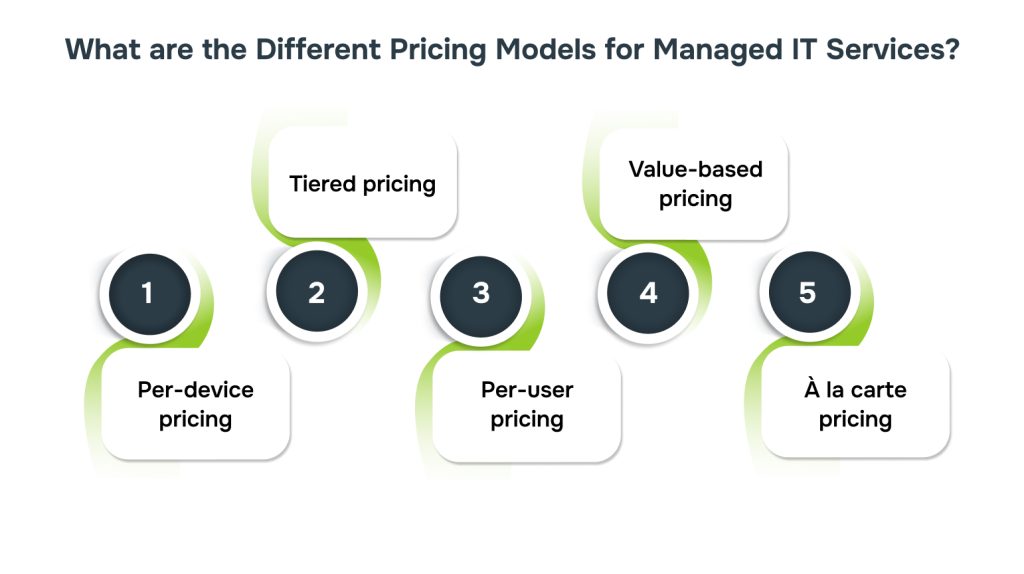
The right pricing model for managed IT services can impact your budget and operational efficiency. Each model suits different business needs, from small companies to larger enterprises. Understanding the options will help you select the best approach.
Here are the common pricing models, each designed to cater to different business needs:
- Per-device pricing: Businesses are charged based on the number of devices managed. It is ideal for companies with many devices, such as retail businesses with multiple point-of-sale terminals.
- Tiered pricing: Offers multiple service levels, with each tier including a specific set of features. It is suitable for businesses looking for flexibility based on their size or requirements, allowing them to scale as needed.
- Per-user pricing: Charges are decided based on the number of users who require access to IT services. Suited for businesses with fluctuating employee numbers or those in need of scalable solutions, like remote or hybrid teams.
- Value-based pricing: The price of service is based on the value delivered to the business. Ideal for businesses that require highly customised solutions and want to align costs directly with service impact.
- À la carte pricing: Businesses can choose specific services they need and pay accordingly. This is best for companies looking to tailor their service package without paying for unnecessary features.
Pricing models for managed IT services vary to suit different business needs. Next, it’s important to understand how these services benefit your business in terms of efficiency and growth.
What are the Benefits of Managed IT Services?
Handling IT resources can be a challenge, often leading to security vulnerabilities, downtime, and rising operational costs. Managed IT services resolve these issues by offering expert support, improved security, and proactive maintenance.
By understanding the benefits of managed IT services, you can see how they provide value and align with strategic goals.
- Enhanced security: Managed IT services continuously monitor systems, employing advanced security measures to protect against evolving threats.
Example: Providers like Microsoft Azure Security offer real-time threat detection and automated response, ensuring business data remains secure.
- Quick issue resolution: With 24/7 support, managed IT services reduce downtime by addressing issues quickly.
Example: IBM Managed Services offers round-the-clock IT support, resolving issues in real time and ensuring businesses stay operational.
- Access to the latest technology: Managed IT services provide businesses with access to new technologies without upfront costs.
Example: AWS Managed Services gives businesses access to cloud tools and AI solutions without the need to invest heavily in infrastructure.
- Regulatory compliance: IT providers ensure your business complies with industry regulations such as GDPR.
Example: Rackspace Managed Security Services ensures businesses meet GDPR standards, reducing the risk of fines from non-compliance.
- Optimised IT operations: Managed IT services fine-tune system performance to enhance speed, reliability, and overall operational efficiency.
Example: Cisco Managed Services helps businesses optimise network infrastructure, boosting performance and supporting growth through expert network management.
Managed IT services offer benefits like improved security and faster issue resolution. However, it’s also essential to understand the limitations of managed IT services to make an informed decision.

What are the Limitations of Managed IT Services?
Managed IT services can create dependencies on external providers, reducing control over critical systems. Businesses may face challenges with service responsiveness, integration with old infrastructure, and vendor lock-in. These limitations need to be carefully evaluated before outsourcing IT functions.
The following points highlight the key limitations of managed IT services:
| Limitation | Description | Tips to overcome |
| Vendor lock-in | Long-term contracts may tie you to a single provider, limiting flexibility. | Negotiate exit clauses and ensure the provider supports data portability. |
| Loss of control | Outsourcing IT can limit your ability to make immediate changes to systems. | Maintain regular communication with the provider to retain some control over decisions. |
| Integration challenges | Managed IT services may face difficulties integrating with existing systems. | Choose providers with experience in integrating with your specific technology stack. |
| Service responsiveness | External providers may not always respond quickly to urgent issues. | Set clear SLAs with defined response times for critical issues. |
| Hidden costs | Additional costs can arise for custom solutions or unexpected service requests. | Ensure transparency in pricing and get a detailed contract outlining all potential costs. |
| Limited customisation | Managed IT services may offer standard solutions that don’t fit unique business needs. | Choose a provider that offers customisation options or supplementary services. |
Struggling with customisation and training? Alberon’s custom software development can tailor solutions to fit your unique business needs. Contact us today to get started!
Managed IT services come with limitations like loss of control that affect the business goals. The next step is to understand how to choose the right provider to ensure your needs are met effectively.
How to Choose the Right Managed IT Service Provider?
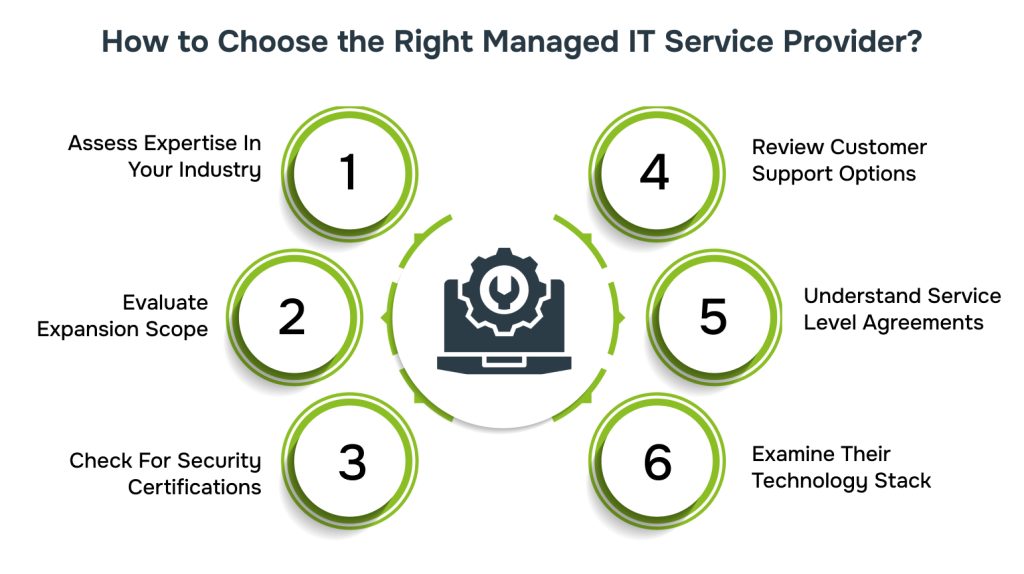
Choosing the right managed IT service provider is essential to avoid issues like system downtime, security gaps, or escalating IT costs. An unreliable provider can lead to operational disruptions and missed growth opportunities. A structured evaluation process ensures that the provider aligns with your business needs and goals.
Below are the main factors to consider when selecting a managed IT service provider:
- Assess expertise in your industry: Choose a provider with experience working in your industry and familiar with the challenges you face. For instance, a provider with experience in healthcare IT can better understand regulatory needs like HIPAA compliance.
- Evaluate expansion scope: Ensure the provider can expand their services as your business grows. If your company is expanding internationally, look for a provider with a global support network and infrastructure.
- Check for security certifications: A reliable provider should have recognised security certifications (e.g., ISO 27001) to ensure your business data is protected. This helps avoid risks associated with cyber threats and data breaches.
- Review customer support options: Opt for a provider that offers 24/7 customer support and clear escalation processes. This ensures that any IT issue can be addressed quickly without impacting business operations.
- Understand service level agreements (SLAs): Review the SLAs carefully to ensure they include guaranteed response times, uptime, and support availability. Make sure they align with your business’s operational needs.
- Examine their technology stack: Ensure the provider uses the latest, reliable technologies that align with your business goals. If your business needs cloud migration, choose a provider with expertise in cloud platforms like Azure.
Selecting the right IT provider involves evaluating expertise and security to ensure alignment with business needs. Alberon offers customised IT solutions that address these factors, helping businesses achieve long-term success.
How Alberon Helps Businesses with Managed IT Services?
Alberon helps businesses optimise IT performance by providing customised solutions that streamline operations, improve security, and ensure compliance.
- Customised Microsoft 365 Setup: Alberon tailors Microsoft 365 apps such as Teams, SharePoint, and OneDrive to your business workflows.
- Structured Teams and Channels: We organise Microsoft Teams into streamlined channels, customised for your business structure, improving communication.
- Process Automation: Using Microsoft Power Platform, Alberon automates repetitive processes, freeing up valuable resources for core tasks.
- Security and Compliance Setup: Alberon configures Microsoft tools to meet the security and compliance requirements specific to your business.
- Training and Support: We provide customised training and ongoing support to help your team effectively adopt new tools and technologies.
Conclusion
Choosing the right managed IT services can be the difference between a business that operates efficiently and one that constantly battles IT issues. It’s not just about managing technology; it’s about ensuring your systems are scalable, secure, and ready to support growth.
Alberon understands that every business has unique IT requirements, which is why our services are modified specifically to address your challenges. We offer strategies that empower your business to stay competitive and focus on its goals.
If you’re looking for a partner who understands your IT challenges and can deliver tailored solutions, contact Alberon today!
FAQs
Q: How do managed IT services improve business efficiency?
A: Managed IT services simplify business operations by automating routine tasks, ensuring consistent system performance, and reducing downtime. This allows employees to focus on critical functions.
Q: What are the main risks of using managed IT services?
A: The main risks include dependency on external vendors, potential communication gaps, and data security concerns. Mitigating these requires clear contracts, SLAs, and regular performance reviews.
Q: Can managed IT services be expanded as my business grows?
A: Yes, managed IT services are designed to grow with your business, adapting to increasing data needs, more users, and expanded IT infrastructure.
Q: How do managed IT services affect data security?
A: Managed IT services improve security by continuously monitoring networks, implementing best practices for encryption, and ensuring timely updates and patches.
Q: How do I know if a managed IT service provider is reliable?
A: Check the provider’s track record, read client reviews, and evaluate their SLAs. A reliable provider should offer 24/7 support, high uptime guarantees, and proactive issue resolution.
Ready to Improve your Business Productivity
Get a trusted partner to navigate your digital transformation. With Alberon, you can ensure a smooth transition, clear communication, and peace of mind.